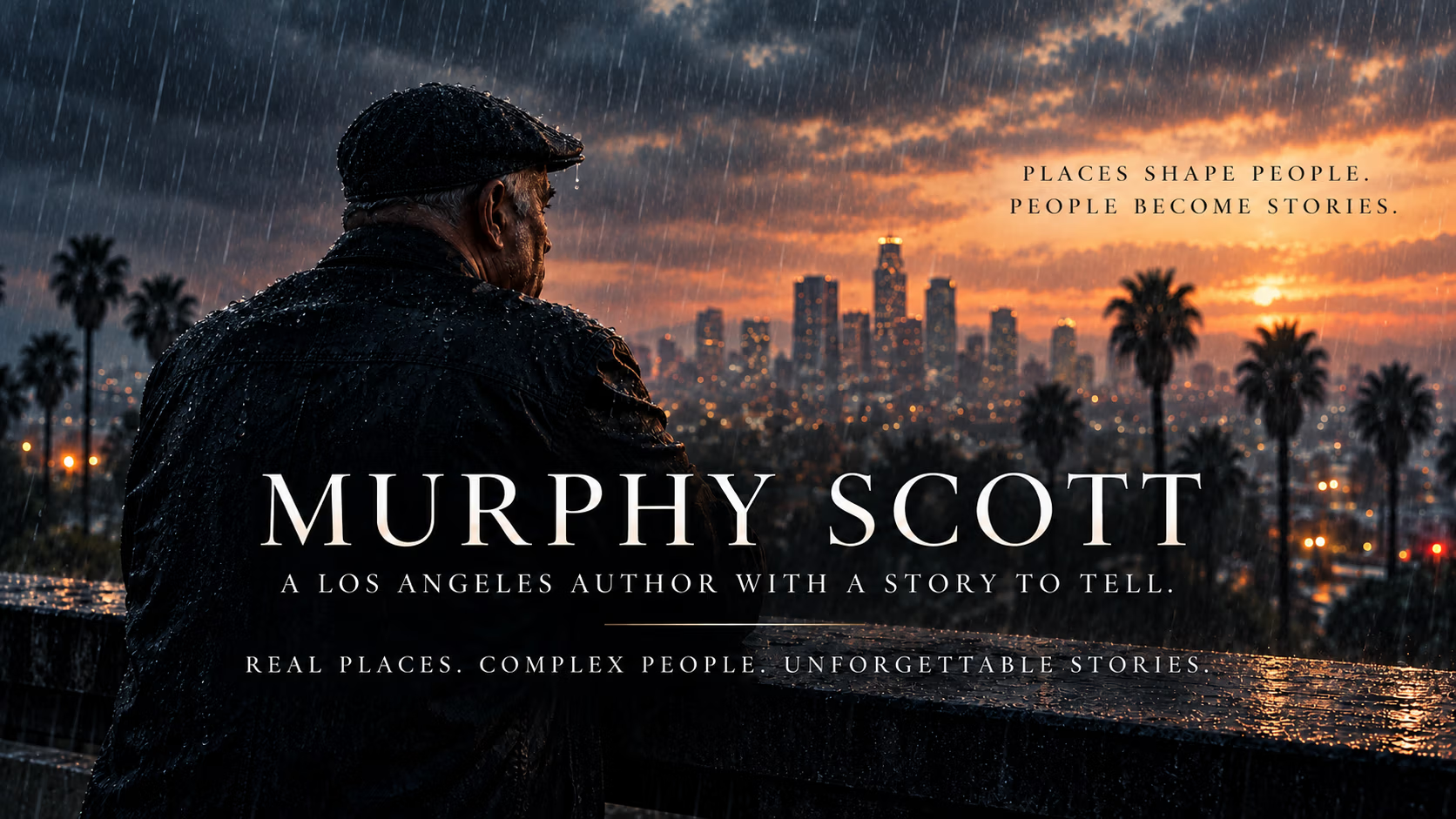
Murphy Scott doesn’t simply write about Los Angeles.
He writes from inside it.
Born in the Little Tokyo district of downtown Los Angeles, Scott grew up in Compton, South Central Los Angeles, and Gardena, California. He graduated from Gardena High School and attended Chapman University and California State University Long Beach before entering the corporate world of Accounts Receivable.
Those Southern California neighborhoods—and the people, cultures, conflicts, relationships, streets, coastlines, bars, memories, and conversations found within them—would later become part of the emotional geography of his writing.
Scott works across several literary forms, including micro-fiction, vignettes, short stories, novellas, freestyle poetry, Japanese Haiku, and Tanka. His themes combine real-life noir, mystery, suspense, and romantic realism.
His writing often focuses on moments other people might miss:
A conversation after midnight.
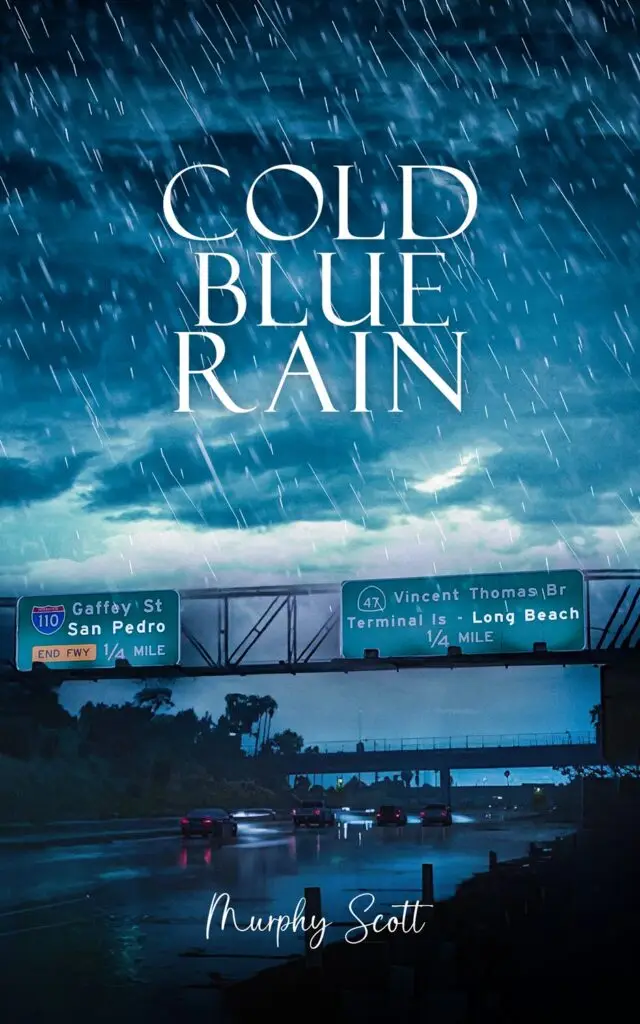
A rainstorm washing over a Los Angeles street.
A memory that arrives without warning.
A stranger at a bar.
A childhood neighborhood that no longer looks the same.
A relationship ending.
A relationship that never had the opportunity to begin.
Beneath those moments are larger questions about love, masculinity, identity, race, aging, regret, mortality, friendship, loneliness, and the strange ways people remember one another.
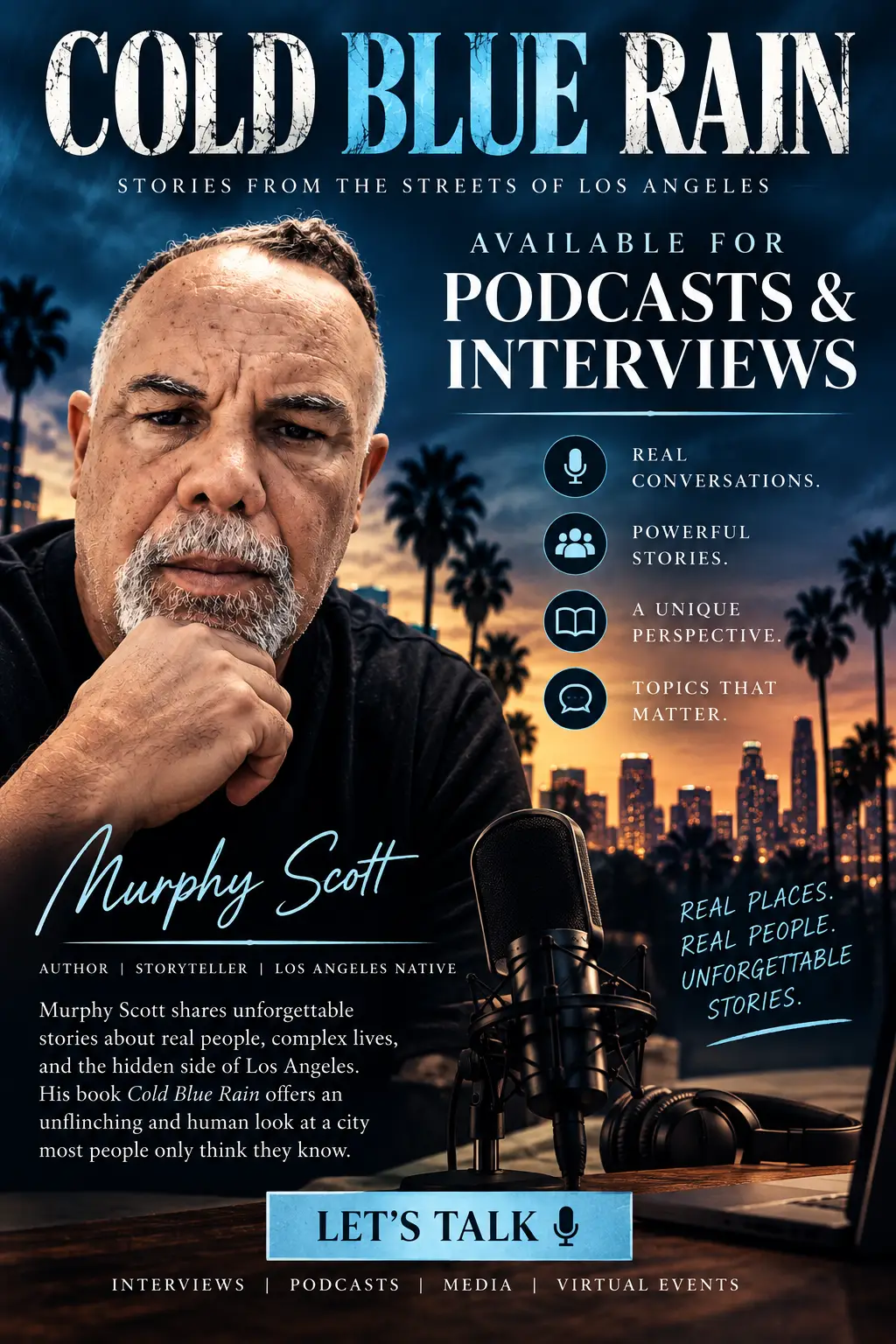
Murphy Scott’s literary world does not separate beauty from hardship.
The two frequently occupy the same street.
There can be violence and tenderness.
Humor and heartbreak.
Desire and loneliness.
Romance and danger.
Past and present.
Scott’s work draws from the traditions of noir while giving the form a personal and contemporary perspective—one rooted in the multicultural communities of Southern California.
One contributor to Cold Blue Rain described the work as romantic yet gritty, while another compared Scott’s style to the atmosphere of classic noir films.
Scott’s Cold Blue Rain introduces readers to bartender Charlie Savannah, whose private journal becomes a mosaic of relationships, encounters, observations, memories, friendships, danger, and longing.
The book’s second major work, Uncle Buddy, shifts to 1940 and follows twelve-year-old Lou Yarber on a family journey from Los Angeles to Texas.
Together, the stories explore people attempting to understand who they are while navigating the expectations and prejudices of the worlds surrounding them.
Scott is also working on a continuation of the Cold Blue Rain story. His supplied biography identifies a sequel as a current writing project.